WELDED FABRICATION
Robotic Welding Systems and Productivity: The Key to Industrial Transformation
OSEL Makine explains how robotic welding systems boost production efficiency. Gain competitive edge with automation, quality, and cost benefits.
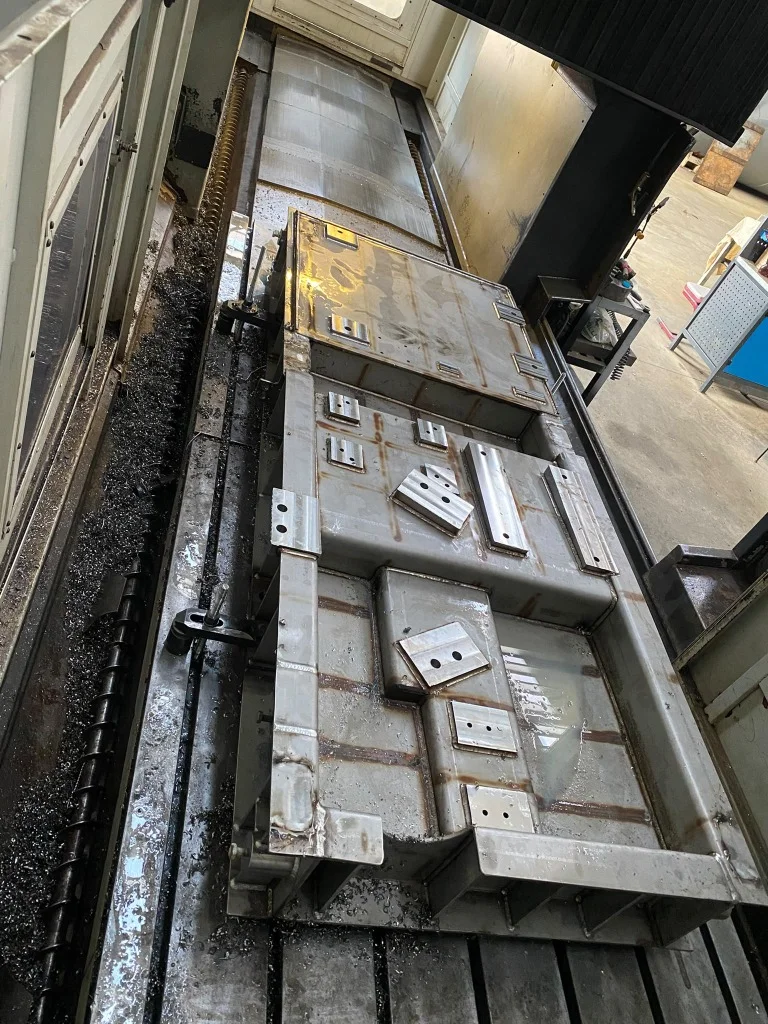
In today's competitive manufacturing industry, optimizing production processes and increasing efficiency are vital for the sustainability of businesses. As OSEL Makine, based in Dilovası KOBİ OSB, with our heavy welding, CNC machining, and special machinery solutions, we closely examine the transformative impact of robotic welding systems on industrial productivity.
What Are Robotic Welding Systems?
Robotic welding systems are integrated solutions that utilize industrial robots to automate welding processes. These systems are designed to perform welding operations traditionally done by human operators with high precision, speed, and repeatability.
The main components of a robotic welding system include:
- Industrial Robot Arm: The mechanical structure that moves the welding torch along a defined path.
- Welding Power Source: The unit that provides the necessary electrical current for the welding process.
- Wire Feeder Unit (for MIG/MAG): The mechanism that delivers the welding wire to the torch.
- Fixtures and Positioners: Equipment that holds the parts to be welded securely and positions them appropriately.
- Control System and Software: The brain that manages the robot's movements, welding parameters, and the entire process.
- Safety Barriers and Sensors: Hardware that ensures the safety of the working area.
Key Elements of Productivity Enhancement
The primary productivity advantages offered by robotic welding systems to businesses are:
1. Repeatability and Weld Quality
Robots apply programmed parameters with millimeter precision and without deviation. This ensures that every weld seam is of the same consistent quality. By eliminating human error, it reduces scrap rates and enhances the quality of the final product.
2. Speed and Production Capacity
Robots can operate 24/7 without human limitations such as fatigue or distraction. Thanks to higher travel speeds and optimized cycle times, production capacity significantly increases. This advantage is critical, especially for high-volume or repetitive productions.
3. Material and Energy Savings
Robotic systems minimize unnecessary material and energy consumption by maintaining welding parameters (current, voltage, wire feed speed) at optimal levels. Less slag, fewer spatter, and more precise welding reduce subsequent cleaning and grinding operations, saving on additional labor and consumable costs.
4. Workforce Optimization and Occupational Safety
Robotic welding removes human operators from hazardous and ergonomically challenging welding environments. Welders can be redirected to more value-added tasks such as complex assembly, inspection, or robot programming. This improves both employee satisfaction and occupational safety.
Application Areas of Robotic Welding Systems
At OSEL Makine, we offer a wide range of robotic welding solutions. Particularly in sectors such as heavy industry, automotive, machine manufacturing, and steel construction, robotic welding systems have become indispensable. Robotic systems provide maximum efficiency in welding complex geometry parts, thick-section materials, or components with high production volumes.
OSEL Makine's Integrated Solutions
OSEL Makine provides turnkey solutions for robotic welding systems, from design and integration to installation and after-sales support. We develop high-tech robotic cells customized to the specific needs of SMEs and large-scale enterprises. Our experienced engineering team analyzes your production line, determines the most suitable automation strategy, and guides you to achieve your efficiency goals.
Return on Investment (ROI)
The initial investment in robotic welding systems quickly pays off in the long run through increased efficiency, improved quality, labor cost savings, and reduced scrap rates. In many cases, the return on investment period ranges from 1-3 years.
| Feature | Manual Welding | Robotic Welding |
|---|---|---|
| Welding Speed | Medium - Low | High - Very High |
| Repeatability | Variable | High and Consistent |
| Weld Quality | Operator Dependent | High and Homogeneous |
| Scrap Rate | Higher | Lower |
| Occupational Safety | Risky Environment | Safe |
| Operating Time | Shift-based, Limited | 24/7 Uninterrupted |
| Labor Cost | High (Long Term) | Lower (Long Term) |
Conclusion
Robotic welding systems are an indispensable part of the modern manufacturing industry. The advantages they offer in terms of efficiency, quality, and cost-effectiveness enhance businesses' competitiveness in the global market. As OSEL Makine, we continue to provide powerful and innovative solutions to our customers on this transformation journey. Contact us today to integrate the production technologies of the future into your business.
LET'S BUILD TOGETHER
Send us your drawing.
A technical drawing, a sample photo or a short description is enough. We clarify sequence, scope and lead time with the quote.